
What is the Credit Card Competition Act?
Editor’s note: This story is continually updated with new information.
With lawmakers threatening to intensify the risk of an Oct. 1 government shutdown over the fiscal year 2024 spending bill, the Credit Card Competition Act — which has the potential to significantly negatively alter, if not completely eliminate, the world of credit card that we know today — may face a vote.
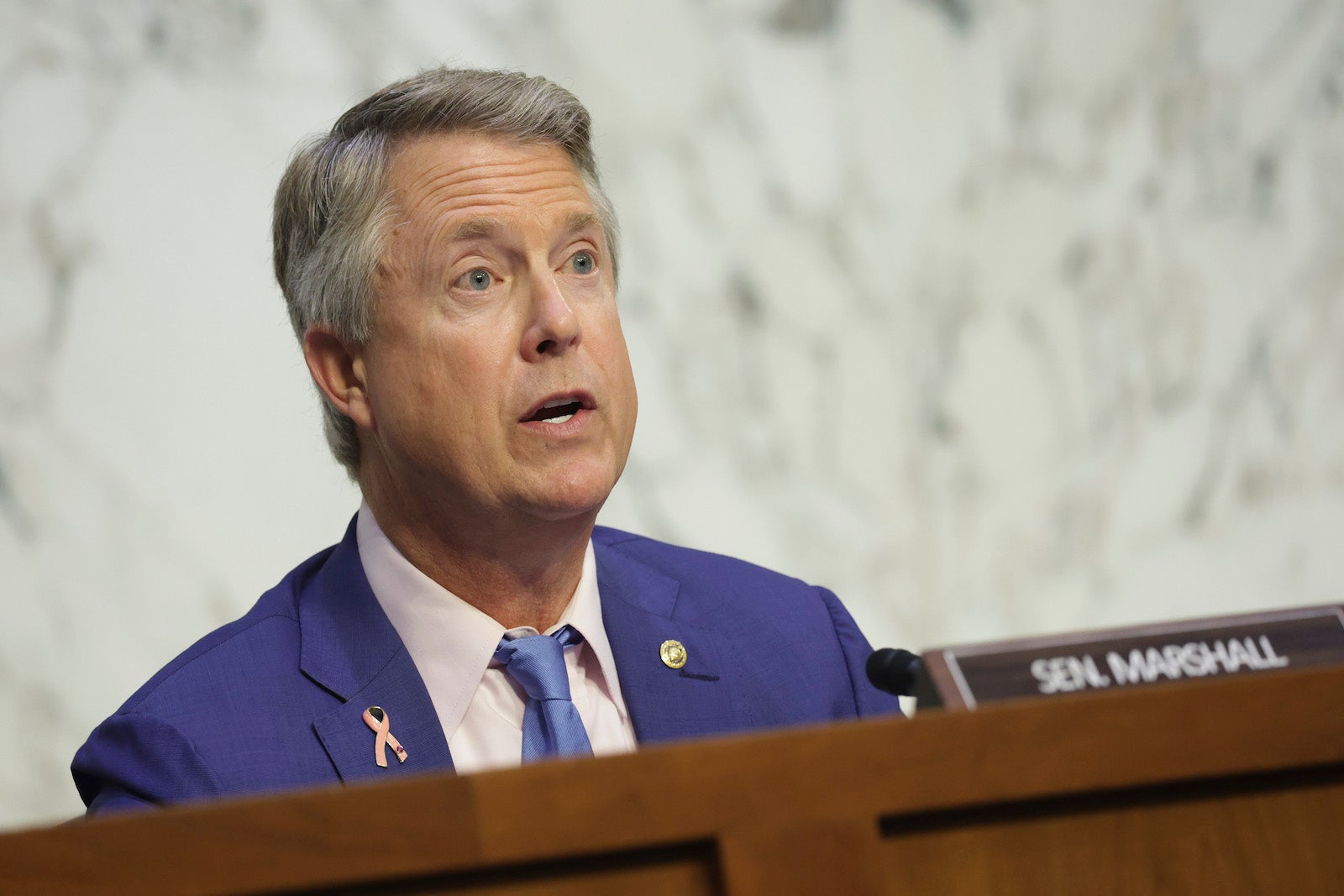
Last week, Sen. Roger Marshall, R-Kan., threatened to attach his bill to the Military Construction, Veterans Affairs, and Related Agencies Appropriations Act and risk thwarting movement on the $280 billion overall government funding package if the Senate fails to vote on his bill to crack down on credit card swipe fees, per Politico.
If enacted, the proposed legislation could dramatically change the rewards ecosystem. It could hurt your ability to collect (and redeem) points and miles toward travel or earn cash back that can offset some of your everyday spending.
Here at TPG, we teach you to maximize your rewards so that you can earn as many as 3 points per dollar when dining out, 4 points per dollar on groceries and 5 points per dollar when booking airfare.
Leveraging these rewards and the perks on popular credit cards gives you the ability to travel more frequently — or in greater comfort — and discover the world. It can also mean more cash in your pocket, a better airport experience and the benefit of purchase protections that don’t exist with other payment methods.
This could all change if this bill is approved.
To help answer your questions about the proposed piece of legislation, we’ve put together this primer that outlines what the bill would do and how it would potentially affect travelers and your hard-earned rewards.
What is the Credit Card Competition Act?
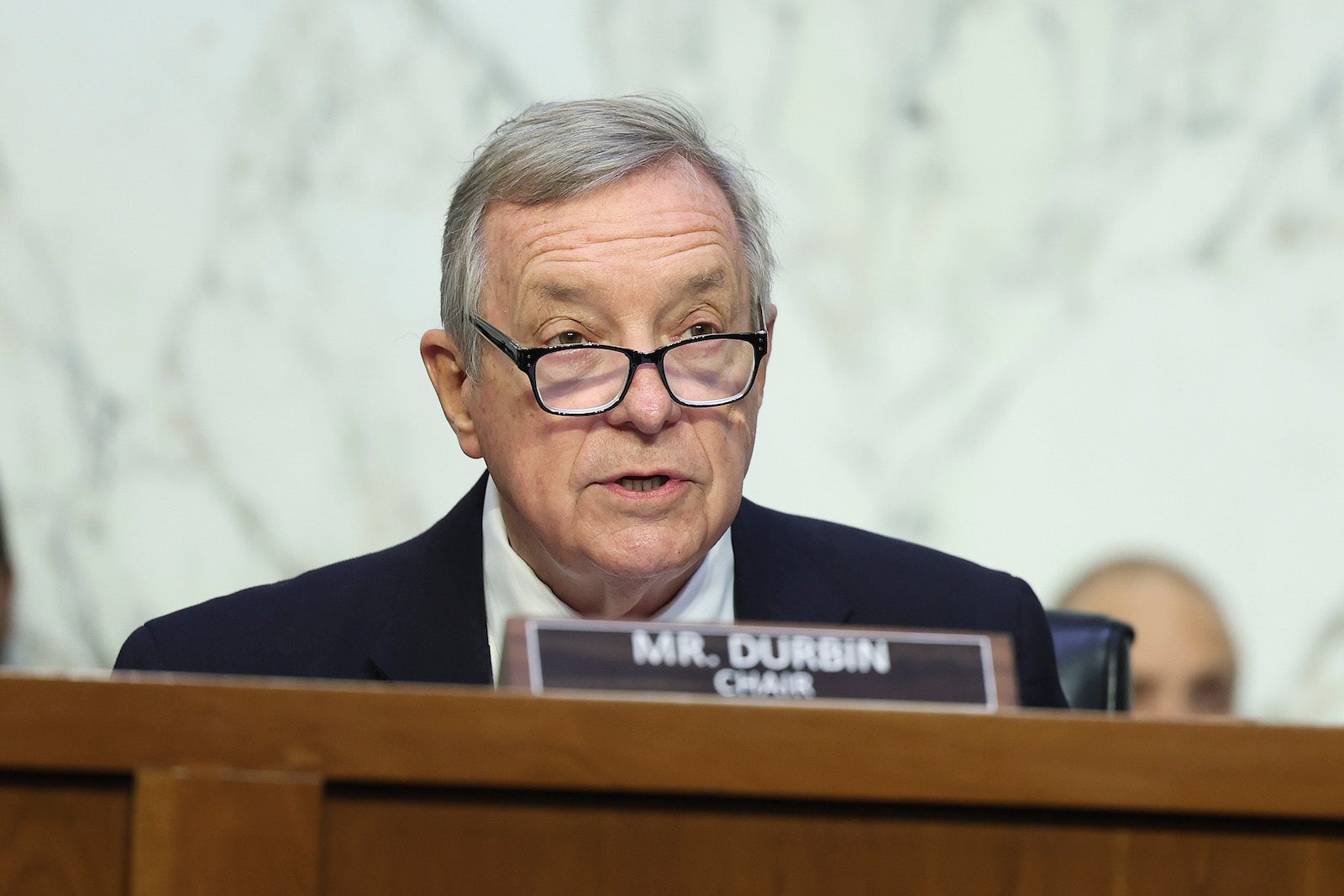
The Credit Card Competition Act originated when Marshall and Sen. Richard Durbin, D-Ill., introduced it July 28, 2022. They later attempted to include it as an amendment to the National Defense Authorization Act. Neither effort gained much traction in Congress.

Daily Newsletter
Reward your inbox with the TPG Daily newsletter
Join over 700,000 readers for breaking news, in-depth guides and exclusive deals from TPG’s experts
On June 7, 2023, Marshall and Durbin reintroduced the bill at a press conference with largely the same structure. They were joined by Sens. Peter Welch, D-Vt., and J.D. Vance, R-Ohio, as well as Reps. Lance Gooden, R-Texas, and Zoe Lofgren, D-Calif.
As its name implies, the proposed legislation aims to inject more competition into the credit card industry to lower the fees merchants pay whenever shoppers swipe their credit cards.
If enacted, the law would amend the Electronic Fund Transfer Act by directing the Federal Reserve to require credit card-issuing banks to offer a minimum of two networks for merchants processing electronic credit card transactions. It even specifically prohibits these two networks from being those with the largest market share of cards today — Visa and Mastercard.
Interchange fees, also known as swipe fees, are a primary revenue driver among credit card companies, which set fees for merchants in exchange for consumers being able to use credit cards at their establishments. Merchants are charged each time a consumer makes a purchase with a card; the exact amount varies based on the type of card, type of transaction and other elements.
For example, if you go out to eat and use your credit card to pay the $100 bill, a merchant may incur a fee of 3% — which translates to $3 of the $100 purchase. This is a key reason why some merchants have begun adding surcharges for those who don’t pay in cash.
Overall, this totaled approximately $160 billion in card processing fees last year, according to a Nilson Report.
However, this has largely remained flat in recent years as a percentage of transaction volume. When you compare Nilson data from 2019, 2020, 2021 and 2022, here’s how this rate has changed across all transactions processed on credit cards and private-label cards (those tied to a specific retailer and not usable at other merchants).
- 2019: 2.189%
- 2020: 2.167%
- 2021: 2.166%
- 2022: 2.194%
In other words, a merchant who processes $100,000 per year in credit card transactions paid (on average) just $5 more in 2022 than in 2019.
What is this bill trying to accomplish?
This legislation builds on previous efforts to curb transaction fees imposed on merchants, including a Dodd-Frank Wall Street Reform and Consumer Protection Act provision. This mandated that merchants have at least two unaffiliated debit card networks when routing transactions.
Dodd-Frank also included an amendment added to the bill by Durbin. Ultimately becoming known as the Durbin Amendment, the rule established a fixed fee on debit card transaction processing. (Previously, the fee was based on a percentage of the total transaction.) That ended up severely limiting the rewards banks offered for debit card purchases … effectively ending most debit card perks for consumers.
The bill’s authors claim the proposed legislation will improve competition within credit card exchanges, as Visa and Mastercard account for a large proportion of general-purpose credit cards.
The senators also say their bill would help reduce swipe fees while decreasing costs for both merchants and customers. Many are skeptical, though.
Would it be successful in those efforts?
It’s unclear, but evidence from the debit card regulations introduced in 2011 shows mixed results.
The Durbin Amendment clearly lowered costs for merchants, as banks subject to the new cap on debit card interchange rates saw a drop in revenue of $6.5 billion annually, according to a study from the University of Pennsylvania. However, this same study noted that, rather than absorbing this drop in revenue, banks offset the loss entirely by raising other account fees.
Specifically, it found the Durbin Amendment had the following effects:
- The share of free basic checking accounts with no minimum monthly balance requirements dropped from 60% to 20%.
- Average checking account fees increased from $4.34 to $7.44 per month.
The study noted that these fees are “disproportionately borne by low-income consumers whose account balances do not meet the monthly minimum required for these fees to be waived.”
This same shift was highlighted in an article published by George Mason University, noting that the regulation increased the unbanked population in the U.S. by nearly 1 million individuals, primarily among lower-income consumers. In fact, the study estimated that the Durbin Amendment would lead to “a transfer of $1 billion to $3 billion annually from low-income households to large retailers and their shareholders.”
Finally, a 2015 Federal Reserve Bank of Richmond economic survey found little evidence that merchants passed along their cost savings to consumers. Most respondents (77.2%) indicated they kept prices the same in the wake of the new rules, while a sizable portion (21.6%) actually increased prices. Only 1.2% passed on lower prices to customers.
“With the Durbin Amendment, the cost-savings went to bottom lines of shareholders and retailers, not consumers,” TPG founder Brian Kelly said.
What does it mean for credit card rewards?
If history is any guide, this bill could have a massive impact on the rewards ecosystem — including those associated with banks and popular airline and hotel programs that rely on their cobranded card partners as a key source of revenue.
“The unintended consequence of the Durbin Amendment was that it boxed out rewards for lower-income and subprime cardholders,” Brian said. “It killed debit card rewards across America.”
If this bill is applied to credit cards in the same way the Durbin Amendment was to debit cards, there’s potential for history to repeat itself. Credit card companies could significantly scale back (or even discontinue) rewards programs due to decreased revenue from interchange fees.
Since the 2011 implementation of the Durbin Amendment, card issuers have lost $106 billion in swipe fees from debit card transactions, according to an analysis from the Electronic Payments Coalition. Another study by the International Center for Law & Economics estimates that the cap on interchange fees for debit transactions hit large banks’ annual revenues to the tune of $6.6 to $8 billion. The loss in revenue directly contributed to reducing free checking accounts and rewards programs.
In fact, half of debit card issuers regulated by the cap ended their rewards programs in 2011, according to a 2012 study conducted by Pulse and cited by the Federal Reserve Bank of Richmond.
“This bill would take away rewards from consumers since credit card companies would no longer have the ability to fund the programs and the perks we’ve all grown accustomed to, taking the value away from consumers and putting it in the pockets of retailers,” Brian said.
Who would (and would not) benefit if the bill became law?
The largest beneficiaries of the legislation would be merchants. By requiring banks to offer a second option for processing a given credit card transaction, merchants could opt for the lower-priced network — thus lowering the out-of-pocket cost of said transaction.
“Competition will result in lower fees, which have increasingly cut into the razor-thin profit margins of small businesses,” Jeff Brabant, senior manager of federal government relations at the National Federation of Independent Business, said in a statement. “NFIB appreciates … this important legislation, which aims to inject competition by allowing small businesses the freedom to choose between multiple credit card processing networks.”
It’s not just small, local businesses pushing for this change. Large, big-box stores stand to gain the most.
Unsurprisingly, on Sept. 14, 2022, more than 1,700 merchants — including Target and Walmart — sent a letter to Congress in support of the bill.
However, many groups strongly oppose the bill in its current form.
The Electronic Payments Coalition — a group representing credit unions, community banks, payment card networks and other banking institutions involved in the electronic payment process — has been outspoken against the bill. It released a statement on behalf of it and seven other trade associations representing the financial services industry.
“This legislation hurts consumers by increasing costs, weakening payment security, harming financial institutions, reducing access to credit for those who need it the most and ending popular credit card rewards programs,” this statement read, in part.
It could also lead to higher fees for various other banking products like checking accounts — another byproduct of the Durbin Amendment, as noted previously.
Lower interchange fees would directly affect the bottom lines of banks; banks use this revenue to enhance their services and security while simultaneously passing some of it onto consumers through rewards. Ironically, this could hurt those who’ve never held a credit card.
“Marginalized communities will pay the price … when credit card companies attempt to protect their bottom lines,” warned Brett Buckner, managing director at OneMN.org, a public policy advocacy group focused on racial, social and economic equity. “Banks issuing credit cards will now begin raising interest rates, fees and credit standards in order to save money and restrict access to those deemed a credit risk. Sadly, the burden will fall heaviest on those who can afford it the least.”
Many who use rewards programs are upper-income spenders without any balance to carry over and, therefore, no interest to pay. However, low-income credit card spenders are disproportionately affected by higher interest rates, fees and credit standards.
But there’s another group that could lose: travel companies.
Cobranded credit cards, including those that offer rewards in specific loyalty programs, are also potentially at stake. This warning came from industry groups, including Airlines for America — a trade group representing major North American airlines, including United Airlines, American Airlines and Delta Air Lines.
“This legislation would also unnecessarily increase the annual fees associated with participating in these programs or otherwise harm our ability to reward our most enthusiastic customers’ loyalty,” A4A said in a letter to Congress on Oct. 11, 2022 (a copy of which was shared with TPG). “We are also concerned that the legislation will reward networks who invest the least in technological innovation and fraud protection — putting our valued customers’ financial security at risk.”
The group took things a step further this week, launching a new website highlighting the negative impacts this legislation could have on the millions of consumers who carry cobranded airline cards.
What’s next for the Credit Card Competition Act?
In response to the bill potentially coming to the Senate floor this week, 11 trade associations from the financial services industry wrote a letter to Congress opposing the senators’ efforts.
“The financial services industry stands united in opposition to the effort by Senators Durbin and Marshall to delay funding for veterans and our military in order to gift a massive government handout to Walmart, Target, and other big-box retailers,” the associations representing primarily banks and credit unions said in a joint statement Tuesday. “The Durbin-Marshall credit card routing legislation has no relevance to military or veteran spending whatsoever. We call on both Senators to promptly abandon their effort to use the Military Construction, Veterans Affairs, and Related Agencies Appropriations Act to secure government favors for big-box retailers at the expense of consumers, small businesses, and small financial institutions.”
Additionally, Airlines for America launched a new campaign, “Protect Our Points,” against the proposal under consideration, deeming it a “threat to airline cardholders” while urging Congress to “consider the negative impacts this legislation will have on the millions of consumers who use co-branded credit cards to accrue reward points, including airline miles, each and every day.”
We’ll be watching it all carefully here at TPG to see how, if at all, the newly reintroduced Credit Card Competition Act moves forward with budget negotiations.
Bottom line
As of Tuesday, the Credit Competition Act remains without a vote. However, that could change as early as this week.
As a company founded partly on the principle of using credit card rewards programs to help save money on travel, TPG is among the many organizations with a vested interest in this cause. While we do partner with major credit card issuers, our staff members and millions of our readers have seen firsthand how rewards programs can unlock travel that otherwise wouldn’t be possible. By making travel more accessible, we help our readers broaden their horizons, open their minds and experience different cultures — all of which would be jeopardized with this bill’s passage.
“This would be disastrous for consumers, especially those who get immense value from rewards and protections on credit cards, by allowing retailers to pocket the interchange savings,” Brian warned. “Consumers would lose out on rewards, purchase protections and fraud protections, while retailers would add to their bottom line.”
In contrast, those lobbying for the bill, including the Merchants Payments Coalition, believe merchants should have more freedom in processing credit card transactions. This includes choosing networks with lower fees.
However, history has shown that any drop in these fees could wind up being a windfall for merchants — and could ultimately cost consumers.
Related reading: